
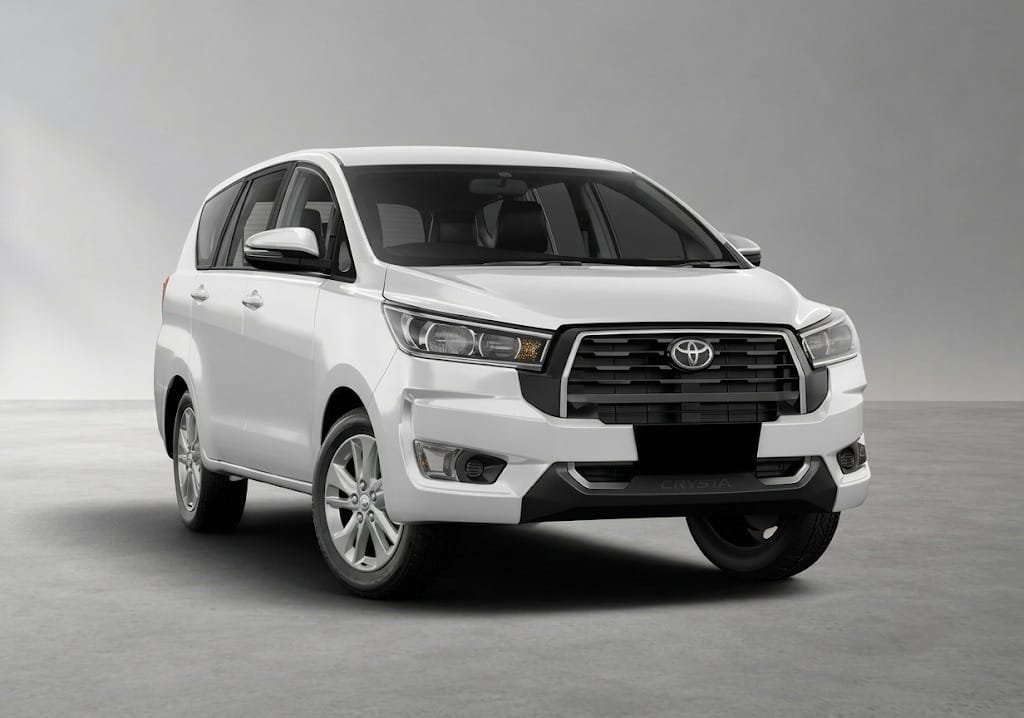
Toyota Kirloskar Motor (TKM) has silently expanded its legendary MPV portfolio in India with the introduction of the Toyota Innova Crysta Limo. Positioned alongside the standard private registration Innova Crysta, the “Limo” suffix has stirred quite a lot of curiosity. Let’s make it clear right at the outset. It is not a stretch limousine with a partition and a mini-fridge. Both models utilise the exact same body, ladder-frame chassis and engine.
What exactly is the difference and which one makes the most sense for you?
Here is the definitive buying guide for Indian MPV buyers.
Toyota Innova Crysta Limo vs Standard Crysta: Key Differences
| Feature | Toyota Innova Crysta Limo | Standard Innova Crysta |
|---|---|---|
| Target Audience | Commercial Fleet & Tour Operators | Private Family Buyers |
| Registration Type | Yellow Plate (Commercial T-Permit) | White Plate (Private registration) |
| Variant Availability | Strictly GX-SLF trim | GX, GX+, VX, and ZX |
| Top Speed Limit | Electronically limited to 80 kmph | Unlocked up to 170 kmph |
| Interior Seating | 7-seater / 8-seater | 7-seater / 8-seater |
| Lighting Setup | Standard Halogen Headlamps | Halogens on GX/GX+ LED Projectors on VX/ZX |
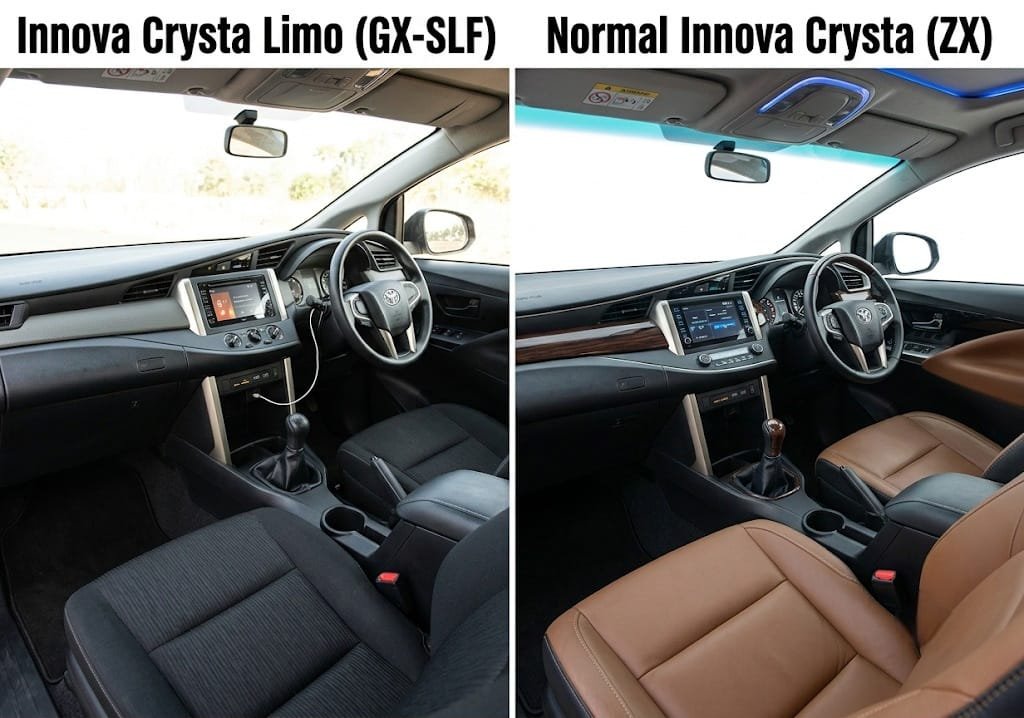
| Cabin Upholstery | Rugged, Black Fabric | Premium Fabric (GX to VX) Tan/Brown Leather (ZX) |
| Starting Price (Ex-sh) | Rs. 19.95 Lakh | Rs. 19.99 Lakh to Rs. 27.10 Lakh |
The Big Engine Check: No Mechanical Changes
Under the hood, both variants are powered by the same workhorse. According to the official Innova Crysta specification sheet, Toyota offers a single 2.4-litre diesel powertrain across the entire lineup.
- Engine: 2.4-litre 4-cylinder GD-series Turbo-Diesel (2,393 cc)
- Max Power: 148 bhp (150 PS) @ 3,400 rpm
- Peak Torque: 343 Nm @ 1,400 to 2,800 rpm
- Gearbox: 5-speed Manual only (No Automatic option anymore)
- Drivetrain: Rear-Wheel Drive (RWD) on a ladder-frame chassis
- Drive Modes: Eco and Power
Whether you sit in a Limo or the top-tier private ZX the ride quality remains exactly the same.
Toyota Innova Crysta Limo (GX-SLF): For The Fleet Masters
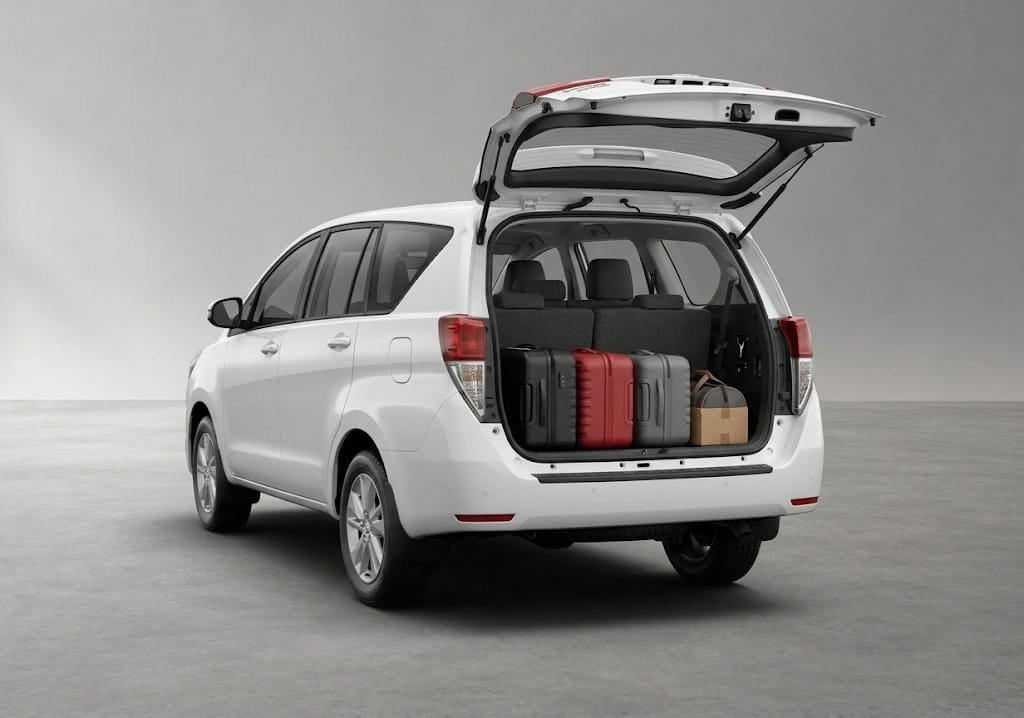
- Variant & Price: Available as the 7-seater Limo (Rs 19.95 lakh) and 8-seater Limo (Rs 19.99 lakh) ex-showroom.
- The “Limo” Rebrand: The Crysta Limo is essentially the GX-SLF (Fleet) grade. Toyota added the “Limo” badging so corporate clients, hotels, and tourist passengers feel they are riding in an executive class rather than a basic taxi.
- Speed Governor: Because it is registered as a commercial vehicle (yellow plate), it comes factory-fitted with an electronic speed governor capped strictly at 80 kmph in accordance with Indian road rules.
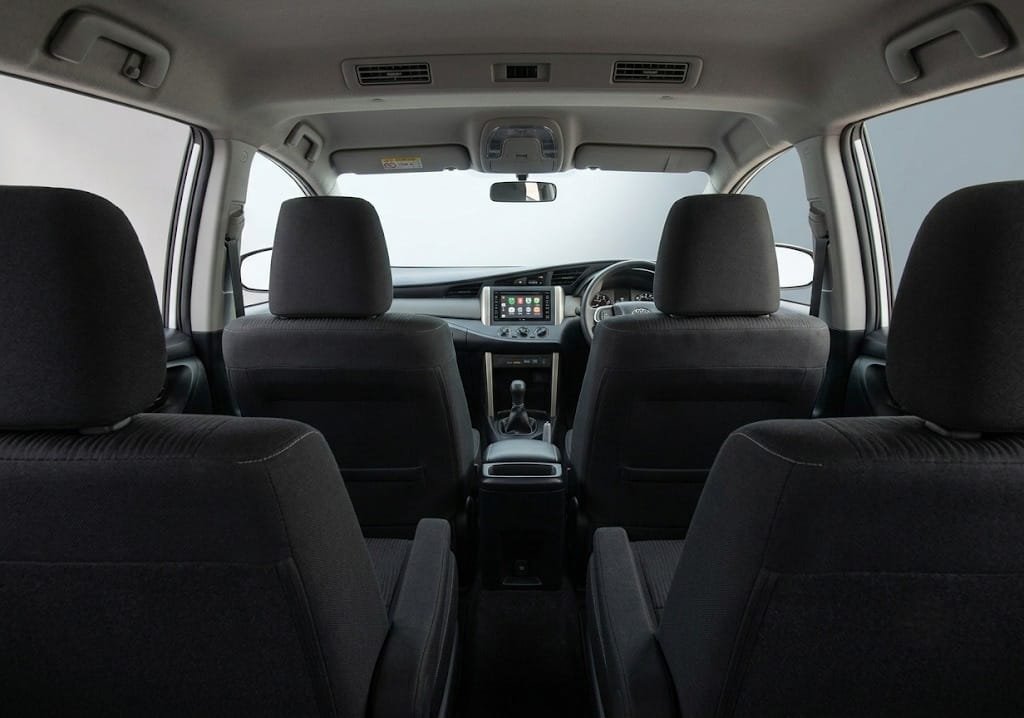
- Cabin & Features: Kept very basic yet functional for continuous and rough usage. It features black fabric seats and a manual AC with dedicated roof vents for all three rows. You still get utility basics like an 8-inch touchscreen (wired Apple CarPlay/Android Auto), steering-mounted audio controls, three airbags, ABS with EBD, Vehicle Stability Control (VSC), and Hill Start Assist.
Standard Innova Crysta: The Quintessential Family Lounge
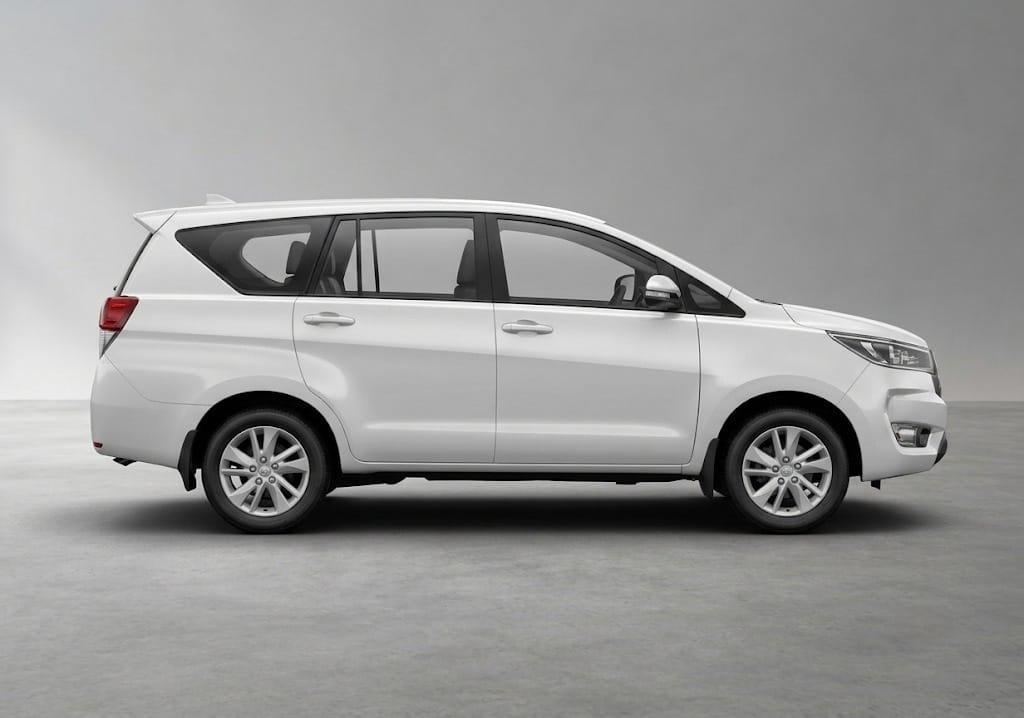
- Variant & Price: Available across GX, GX+, VX, and ZX grades. Ranging from Rs 19.99 lakh to Rs 27.10 lakh (ex-showroom). Buyers can also check city-specific on-road pricing and trim levels via Toyota’s Virtual Showroom Configurator.
- No Speed Limits: The family Innova Crysta has no speed governor which allows you to comfortably cruise at 100-120 kmph on national expressways.
- Visual Premium: Step up to the VX and top-end ZX variants for plenty of chrome garnish, sharp LED projector headlights with LED DRLs, 17-inch dual-tone alloy wheels (compared to 16-inch on the Limo) and front fog lamps.
- Luxury Interior: The top-spec ZX variant provides a feel of luxury with dual-tone Hazel Brown leatherette seats. Driver seat is 8-way power-adjustable. Features include keyless entry with push-button start, automatic climate control, cool blue ambient roof lighting, cruise control, and seven airbags.
Real-World Mileage & Highway Range
On paper, Toyota claims a fuel efficiency of 15.1 kmpl for the 2.4L manual but you can realistically expect:
- In City Traffic: 9 to 11 kmpl depending on stop-and-go traffic.
- On Highways (Standard): 13 to 14.5 kmpl when cruising between 90 and 100 kmph.
- The Limo Advantage: Because the Crysta Limo is electronically limited to 80 kmph the engine operates in a fuel-efficient rpm band. You can regularly expect over 15 kmpl on highways. With a 55-litre fuel tank, the Limo easily covers 650 to 750 km on a full tank.
Alternatives To Consider Before Booking
- Toyota Innova Hycross: The monocoque front-wheel-drive sibling. Powered by a petrol-hybrid setup with an automatic (e-CVT) gearbox. It is modern and features rich with an impressive 17-18 kmpl in cities.
Verdict: Choose the Hycross for urban luxury and comfort and stick to the diesel Crysta if you frequently travel in rough conditions.
- Kia Carens: A much more affordable MPV. It offers a 1.5-litre diesel with an automatic. Carens is loaded with modern features and has a very practical, family-friendly cabin.
Verdict: If you want urban convenience and features on a budget.
- Mahindra Scorpio-N: Built on a tough ladder-frame with RWD and a powerful 2.2-litre mHawk diesel.
Verdict: If you want robust off-road SUV capability. Keep in mind that its third-row and boot space fall short when compared to the Crysta and Hycross
- Maruti Suzuki Invicto: A rebadged Hycross sold via NEXA. It offers slightly shorter waiting periods with attractive benefits.
Final Verdict: Who Should Buy Which?
The choice is decided easily by RTO rules:
- Get the Innova Crysta Limo if you are a tour operator, fleet owner, hotel travel desk or cab aggregator. A robust build and a highly comfortable 7/8-seater commercial vehicle. The badge gives your brand an upscale, executive image on a budget.
- Get the Standard Innova Crysta if you want the ultimate private and dependable family MPV. It is a reliable car that covers 3 to 4 lakh kilometres with basic maintenance and retains highest resale values in the Indian used car market.
Also see:
Toyota Innova Hycross Flex-Fuel: What to Expect Before the Launch