
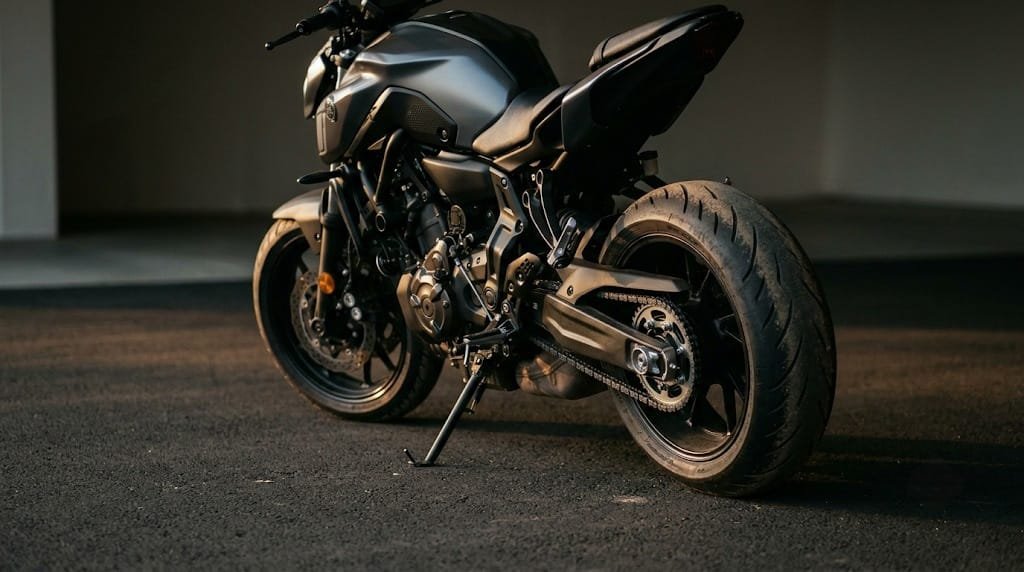
If you look at any motorcycle on the road, you will notice that its front and rear tyres aren’t the same. The front tyre is usually narrow, shaped differently and has a different tread pattern than the rear.
In this post, I have explained how these differences affect braking, acceleration, steering and wet-weather grip. It also covers the buying guide when you plan to replace your tyres.
Key Takeaways
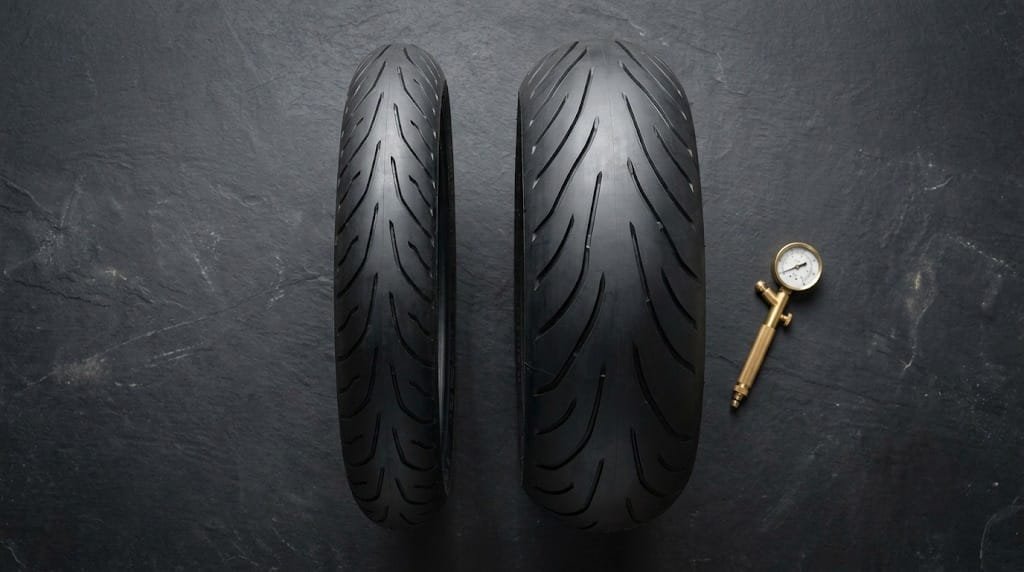
- Rear tires are typically wider, which gives a larger contact patch for traction and drive.
- The front tire steers and handles most of the braking, while the rear tire delivers engine power.
- Front and rear tires are engineered as a matched system, and each one should only be mounted on the wheel it was designed for.
- Tread patterns differ because the front tire clears water and the rear tire balances grip with tread life.
- Rear tires generally wear out sooner, so check pressure and condition regularly.
Front vs Rear Tire Roles
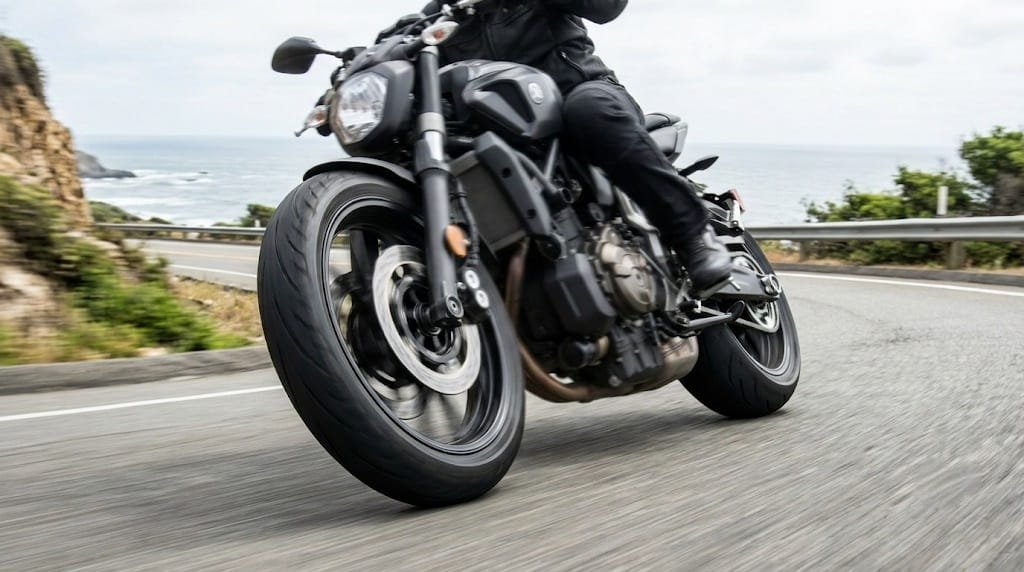
The front tire steers and does most of the braking, while the rear tire sends engine power to the road. Those roles pull tire design in different directions.
Tire makers tune the size, profile, rubber compound, and tread of each tire for its role instead of making a matched pair. The result is two tires that look different but work together as one system.
What the Front Tire Does: Steering and Braking
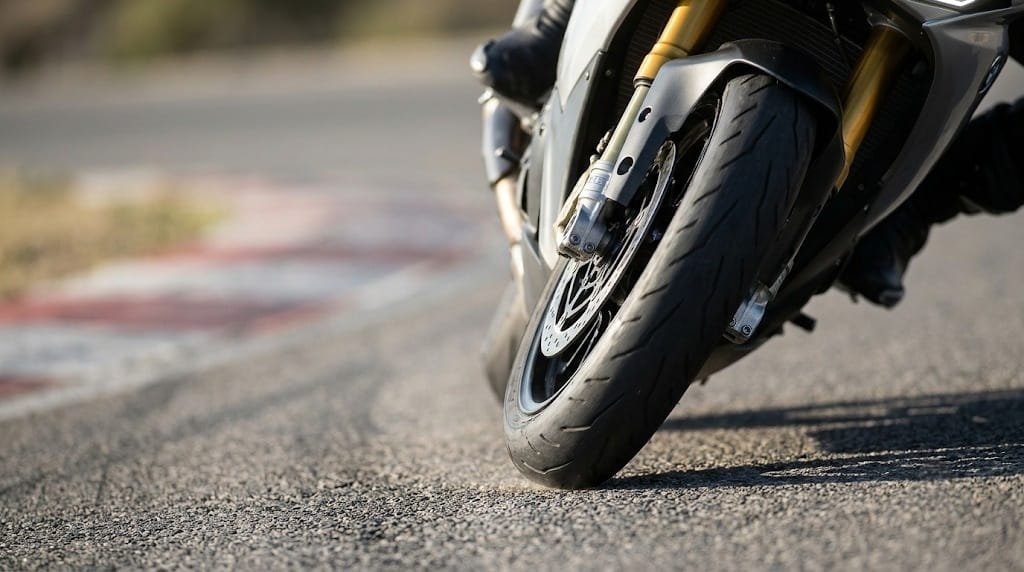
The front tire sets your direction. Every steering input, from a gentle lane change to a tight corner entry, passes through a small contact patch at the front.
It also takes on much of the load when you brake, because weight shifts forward as the bike slows. A front tire has to stay predictable while steering, leaning, and braking hard, sometimes all at once.
That is why front tires are usually narrower than rear tires. A narrower tire is generally lighter and turns in more easily.
What the Rear Tire Does: Power Delivery and Load Support
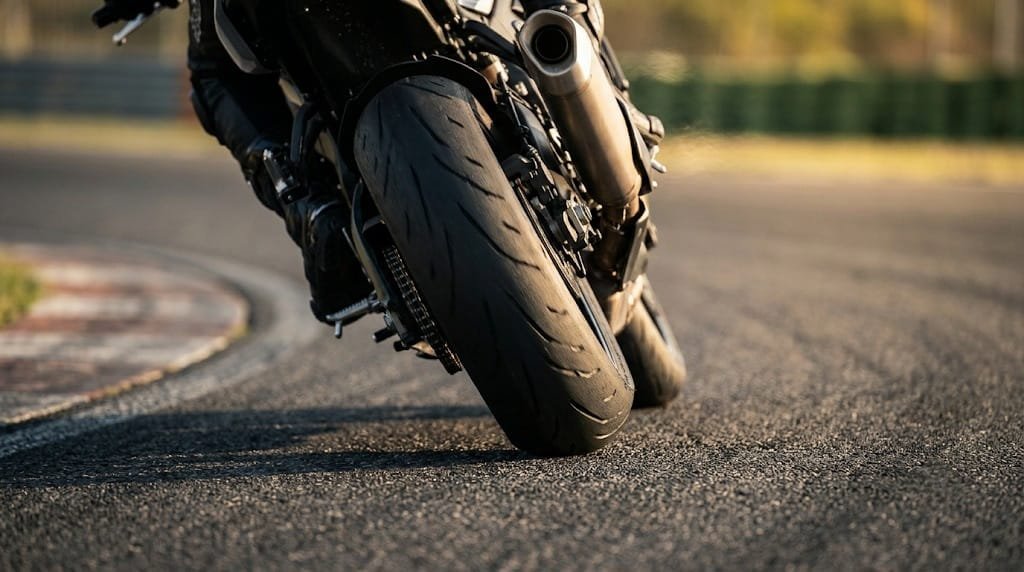
The rear tire transmits engine power to the road. It also carries a large share of the bike and rider’s weight, especially when you add a passenger or luggage.
Because the rear tire must handle acceleration while the bike is leaned over, it is wider and built to resist heat and wear. A wider tire provides a larger contact patch for putting power down.
This extra workload explains why rear tires often wear out faster than front tires. Every time you open the throttle, the rear tire absorbs the driving force.
How Motorcycle Tire Shape and Size Differ
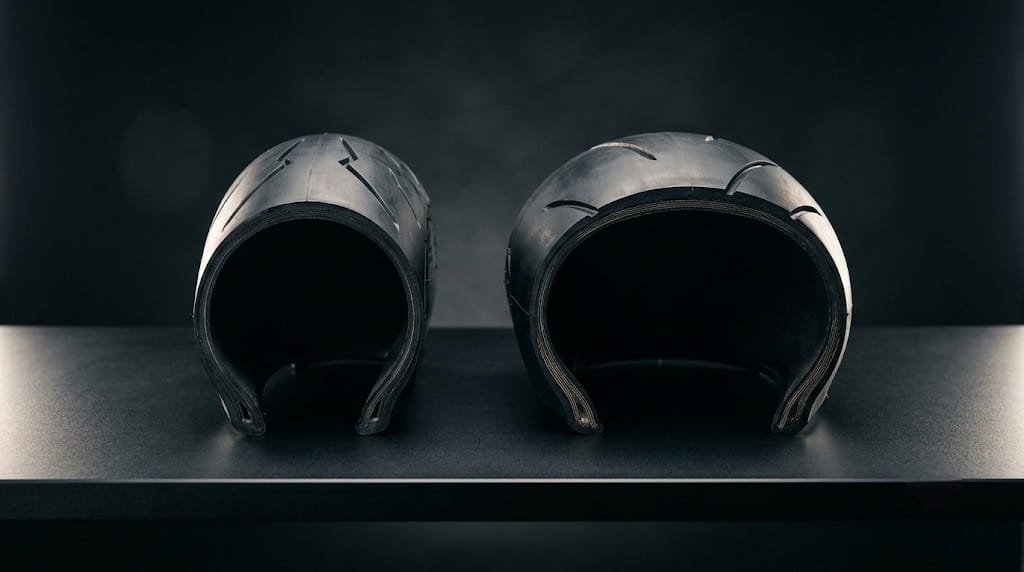
Cross-Section Profile
Motorcycle tires are rounded rather than flat, so the bike can lean while rubber stays in contact with the road. As the bike leans, the contact patch moves from the center of the tread toward the shoulder, so the tire’s shape shapes how the bike feels mid-corner.
Front tires tend to have a narrower, more pointed profile that responds quickly to steering input. Rear tires on touring bikes often have a flatter crown for straight-line stability and longer life, while sport rears are rounder to allow greater lean angles.
Width and Size Markings
A common sport bike size is 120/70ZR17 for the front and 180/55ZR17 for the rear. The first number is the tire width in millimeters, the second is the sidewall height as a percentage of width, and the last is the rim diameter in inches.
Reading these markings on the sidewall shows at a glance how much wider and lower-profile the rear tire is. The letters between the numbers indicate construction type and speed capability.
Why Front and Rear Tread Patterns Differ
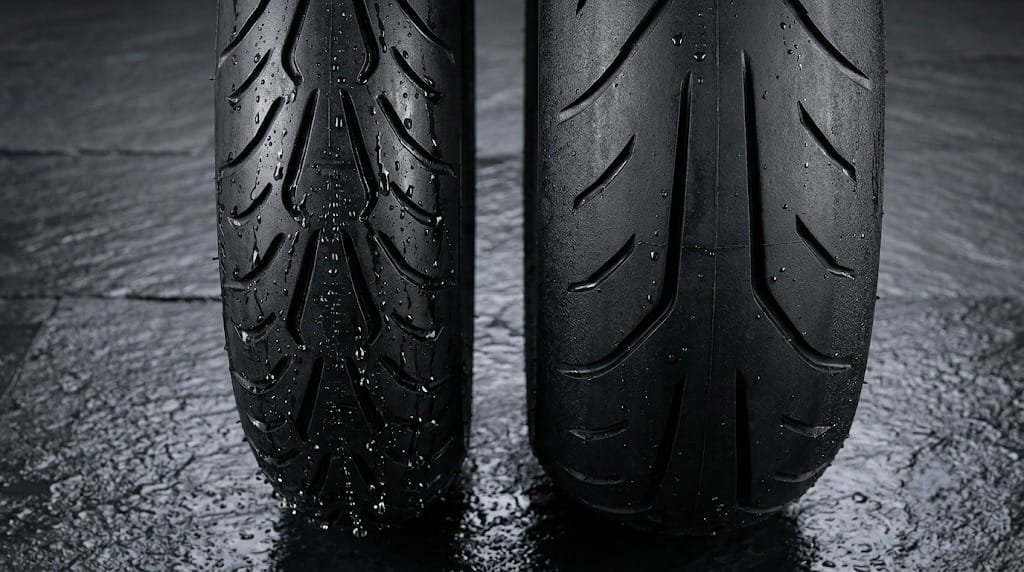
Front Tire Tread
Tread grooves exist mainly to move water out from under the tire. The front tire meets standing water first, so its grooves are designed to channel it away.
A front tread pattern prioritises water evacuation and steady feedback because the front tire is the rider’s primary source of steering confidence. Many front tires also show directional arrows on the sidewall that tell you which way the tire should rotate.
Rear Tire Tread
Rear treads usually keep more rubber in the center of the tire, where the contact patch sits during straight-line acceleration. That design helps with traction and tread life.
Grooves in a rear tread typically angle toward the shoulders so water can escape when the bike is leaned over. Rear tires also carry rotation arrows, so mounting direction matters for both tires.
How Rubber Compounds Differ Front to Rear
Tire makers also vary the rubber itself. Some rear tires use dual compounds, with a harder center for mileage and softer shoulders for cornering grip.
Compound choice is another way manufacturers tailor each tire to the demands of its position. Front tires more often use a single compound that stays consistent through steering and braking.
Front vs. Rear Motorcycle Tire Comparison
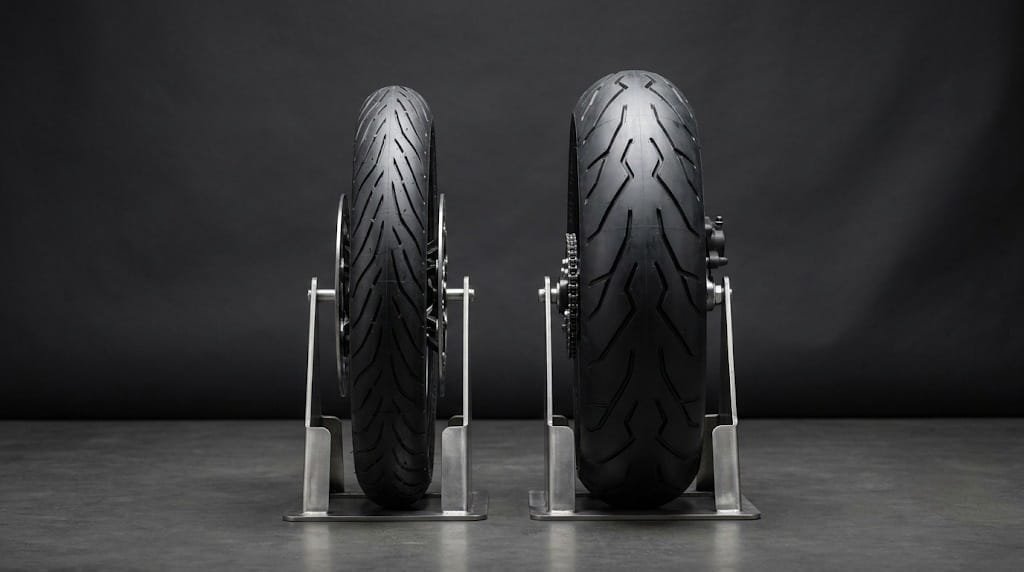
The table below summarizes how front and rear tires typically differ on road-going motorcycles. Exact details vary by model, tire type, and manufacturer.
| Feature | Front Tire | Rear Tire |
| Main job | Steering and braking | Driving power and load support |
| Width | Narrower | Wider |
| Profile | Narrower, more pointed | Rounder on sport tires, flatter on touring tires |
| Tread priority | Water evacuation, steering feedback | Traction and tread life |
| Compound | Often single compound | Often dual compound |
| Typical wear | Slower | Faster |
Do All Motorcycles Follow the Same Pattern?

Not exactly. Cruisers often pair a tall, narrow front tire with a very wide rear, while sport bikes use similar widths that are closer in proportion.
Off-road and dual-sport bikes often use knobby tread on both wheels, but the front and rear tires still differ in size and construction. The principle stays the same: each tire is shaped for steering or for drive.
Why You Should Never Swap Front and Rear Tires
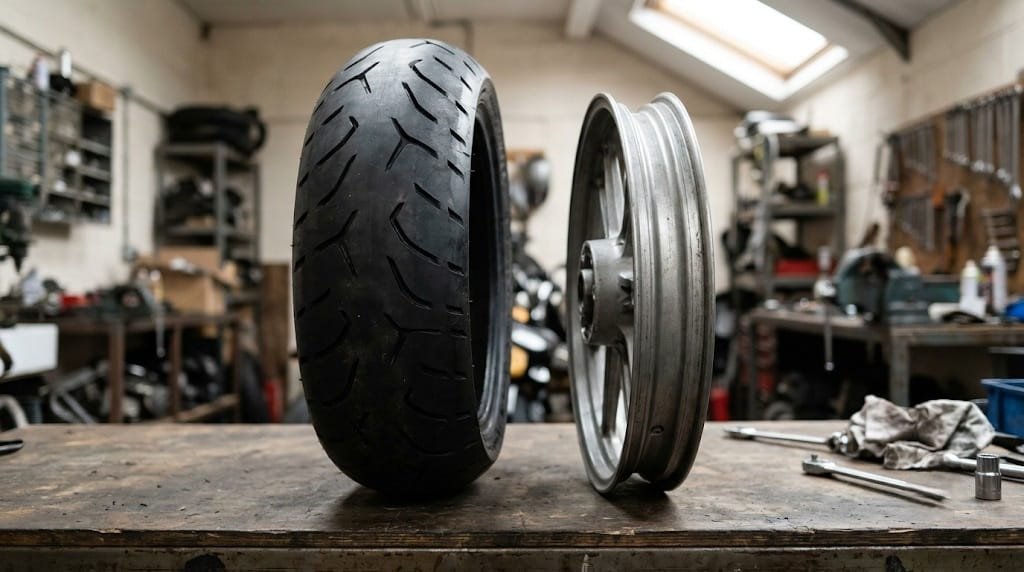
Front and rear tires are built for different loads and different rim sizes. A rear tire will not fit a front rim, and the reverse is also true.
Mounting a tire on the wrong wheel, or in the wrong rotation direction, can reduce grip and compromise handling. Always follow the tire sizes and recommendations listed in your owner’s manual.
Motorcycle Tire Care and Replacement Tips

Check pressure on cold tires, using the figure in your owner’s manual or on the bike’s pressure label. Proper pressure helps your tires keep their intended shape and contact patch, which directly affects grip and wear.
Inspect tread depth and look for cracks, cuts, or bulges before riding. Rear tires often need replacing sooner, but age matters too, so check the four-digit date code on the sidewall.
When you replace tires, many riders choose a front and rear set from the same manufacturer. That keeps the grip characteristics balanced between the two ends of the bike.

Front and rear motorcycle tires differ because steering and braking demand different things than acceleration and load carrying. Understanding those differences helps you choose, mount, and maintain tires that work as the manufacturer intended.
Next time you inspect your bike, compare the width, profile, and tread of each tire. Small details like these explain why a motorcycle handles the way it does.
Also check: Harley-Davidson Sprint 440 vs X440: Which One Should You Buy?