
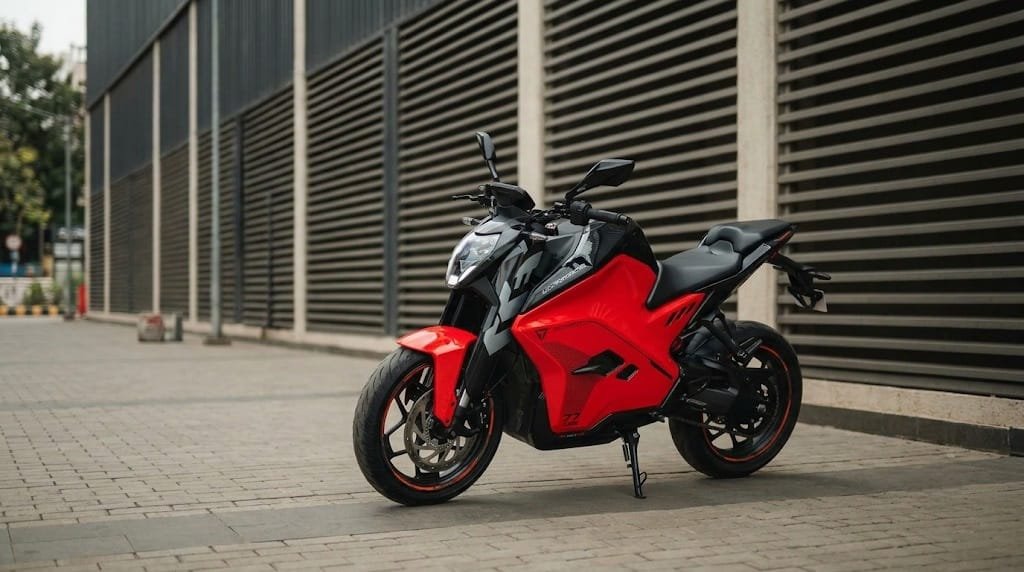
If you ride 120 km every day for work then petrol bills will be very expensive. Spending ₹300 (or about $3.50 to $4.00) a day means roughly ₹75,000 (around $900) a year on fuel. Switching to an electric motorcycle can be a smart financial move. But buying an EV for 30,000 km a year means you need a solid battery and reliable charging with excellent real-world range.
Let us break down everything you need to know before finalising your decision.
The Reality Check: 80 km/h vs 120 km/h Range
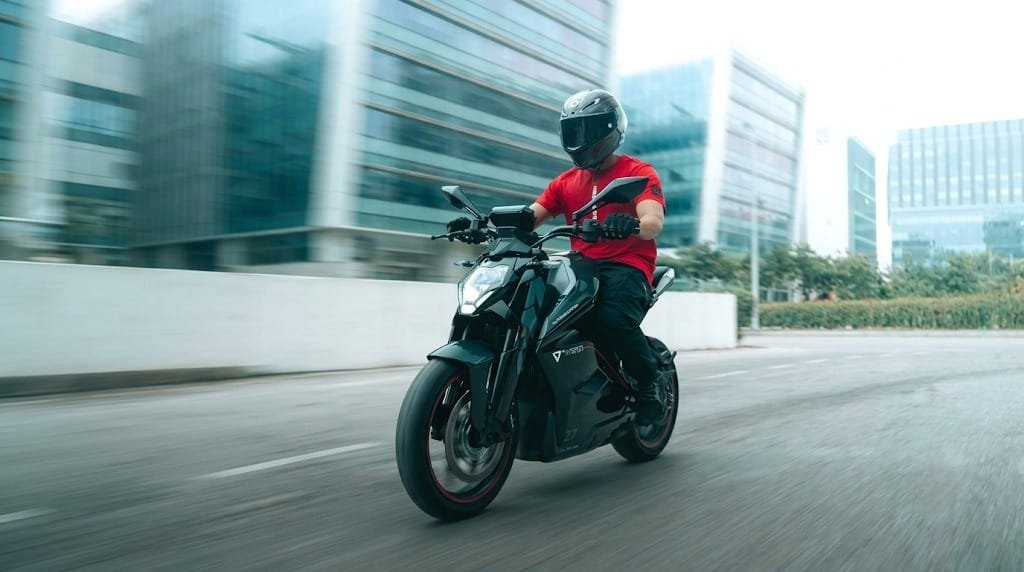
There is always confusion about speed and battery life. Riding at a steady 70-75 km/h uses significantly less power than riding at 120 km/h (75 mph). Wind resistance kills EV batteries at high speeds.
If you ride at a steady 70-75 km/h, a premium electric motorcycle with a 10 kWh to 15 kWh battery will comfortably give you 150 km to 200 km of real-world range. However if you push that same bike to a sustained 120 km/h, the range will drop by almost half. Since your daily route is 80% highway at 60-80 km/h, achieving your 130-150 km target is very possible with the right machine.
Best Electric Motorcycles for Heavy Highway Usage
To get 150 km of highway range with room for battery aging you need a bike with at least a 10 kWh battery. Here are the top choices globally and in India that fit your exact needs.
1. Ultraviolette F77 Mach 2 (Best Premium Option in India). It is currently the most proven high-range electric bike in India and is actively expanding to global markets. It is built for performance and long commutes.
- Bike Segment: Premium Sports Commuter
- Price: Starts around ₹3.09 Lakh in India (roughly $3,700 USD).
- Battery & Range: The Recon variant features a massive 10.3 kWh battery. At a sustained 70-75 km/h it delivers a genuine real-world range of 170 km to 190 km.
- Charging Time: Takes about 5 hours using the standard charger.
- Warranty: Offers an industry-leading warranty of up to 8 years or 8,00,000 km on specific models.
Ultraviolette FAQs | Answers to Common Questions
2. Zero SR/S (Best Global Option) If you are outside India then Zero Motorcycles is the benchmark for highway EVs.
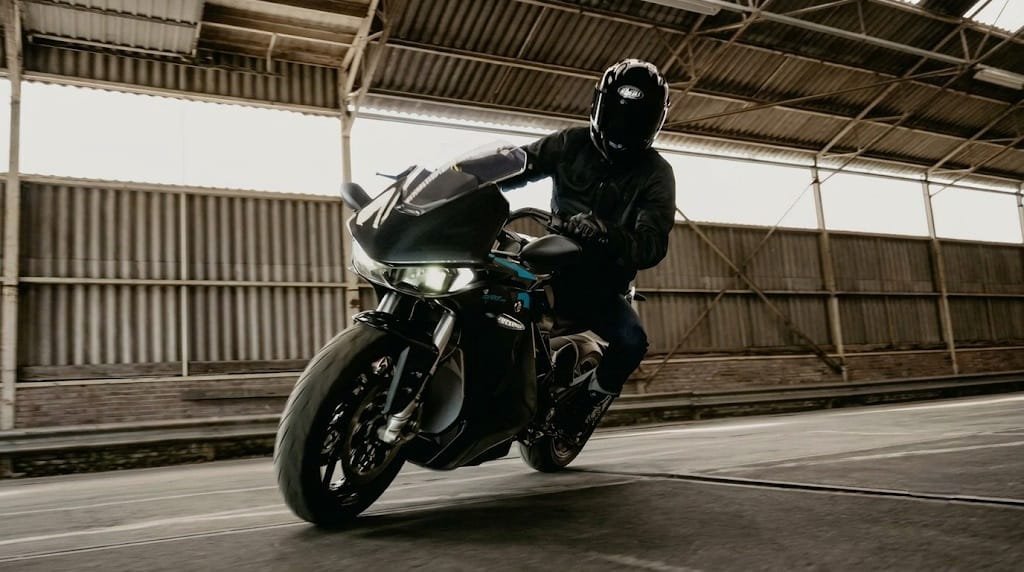
- Bike Segment: Fully Faired Sportbike
- Price: Premium global pricing starting around $19,995 USD (approx. ₹16 Lakh).
- Battery & Range: Features a 17.3 kWh battery. At sustained high speeds on the highway the real-world range is a solid 187 km (116 miles).
- Charging Time: Standard charging takes about 7 hours. Rapid charging gets you to 80% in under 1 hour.
- Warranty: 5-year unlimited mileage battery warranty.
Zero Motorcycles Terms and Conditions
3. Energica Experia (The Ultimate Highway Tourer) This Italian brand builds massive batteries for zero range anxiety.
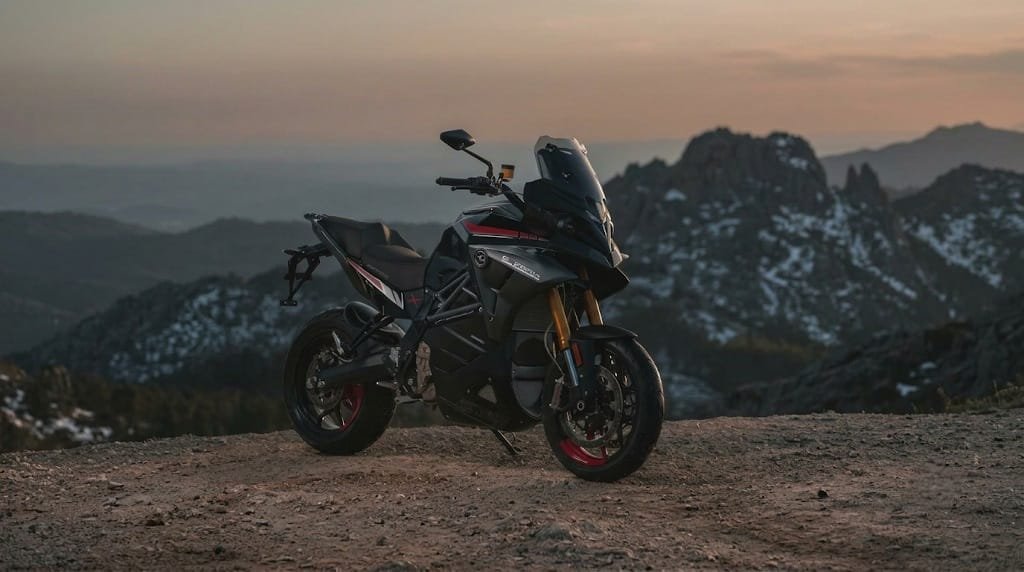
- Bike Segment: Electric Green Tourer
- Price: Premium global pricing at roughly $23,000 USD.
- Battery & Range: Packs a massive 22.5 kWh battery. Extra-urban highway range is an incredible 208 km (130 miles).
- Charging Time: Supports Level 3 DC Fast Charging. It charges from 0 to 80% in just 40 minutes.
- Warranty: 3-year or 50,000 km (31,000 miles) warranty.
4. Ola Roadster Pro (Highest Claimed Range in India) This is a new entrant designed for massive range and high tech.
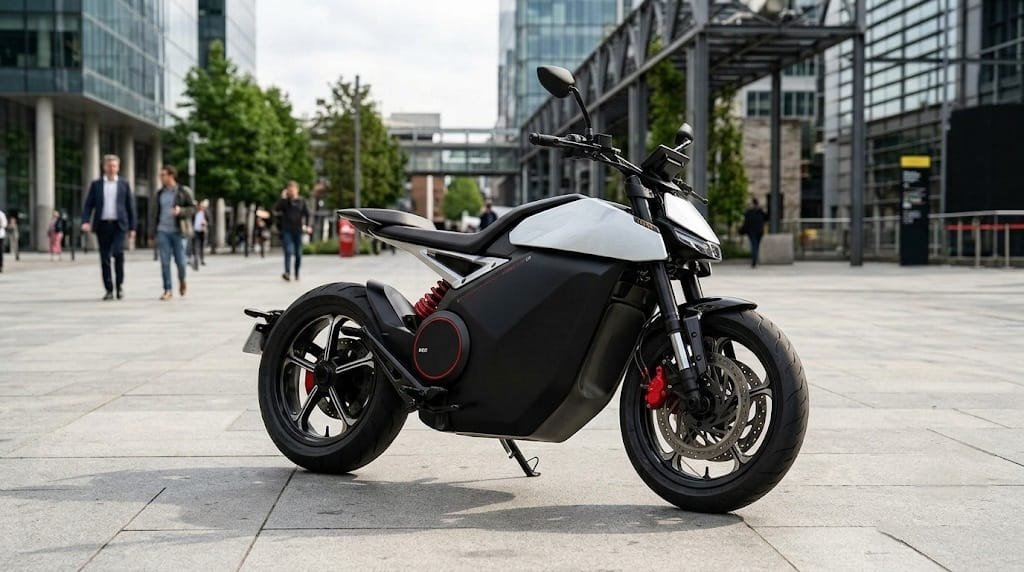
- Bike Segment: Tech Naked Commuter
- Price: Starts at ₹2.00 Lakh (approx. $2,400 USD).
- Battery & Range: Comes with a huge 16 kWh battery option. Even with heavy highway use this will easily cross 250 km in the real world.
- Charging Time: Around 3 hours and 42 minutes.
- Warranty: Standard 8-year battery warranty.
Battery Warranty – Terms and Conditions
How the Battery Holds Up (30,000 km/year)
Doing 25,000+ km a year on an e-bike is becoming common globally. The biggest fear buyers have is battery degradation.
Modern premium EV batteries use active thermal management. Brands like Energica use liquid cooling. Zero uses advanced passive air cooling with aluminum heat sinks. This keeps the battery safe during long highway runs. Because of this technology degradation is very slow. Real-world data shows that a well-maintained battery loses only about 5% to 8% of its capacity after 60,000 km.
If you buy a bike like the Zero SR/S or Ultraviolette F77 that gives you 180 km today, a 10% degradation means you will still get over 160 km of range three years from now. This safely covers your 130-150 km daily requirement.
The Right Charging Strategy
A 120 km daily run will consume almost your entire battery. You should not rely on commercial DC fast chargers every day. Fast charging generates high heat. Doing this daily will degrade your battery faster.
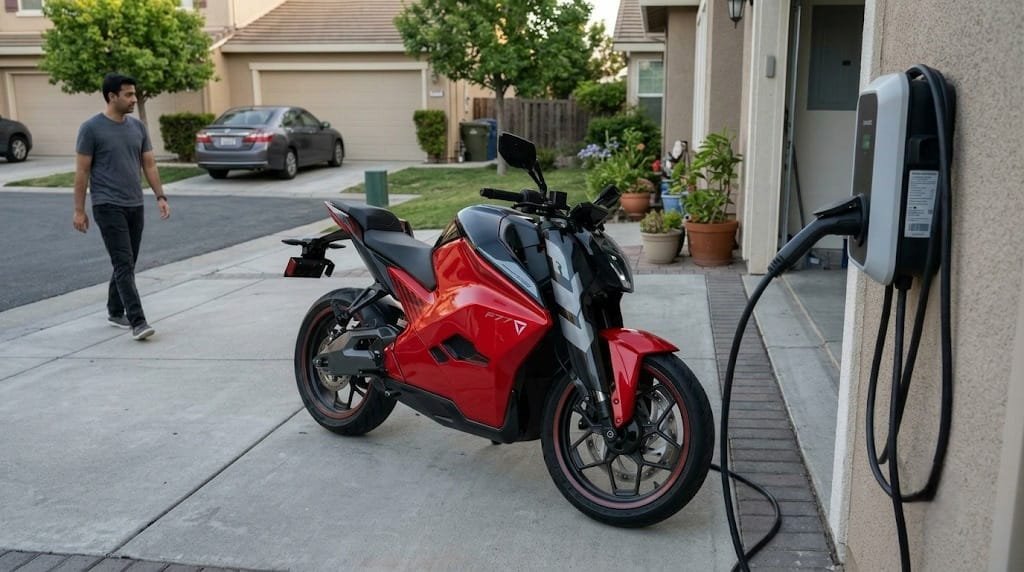
The best setup is charging on your premises. A standard AC wall charger will fill your bike from 10% to 100% overnight. Your bike is always full and ready every morning.
Switching to electric will drop your running cost from ₹300 (or $3.50) a day to roughly ₹60 (or $0.70) a day depending on your local electricity rates. The upfront cost of a premium EV is high. However the massive yearly savings and long-term warranties make it a highly practical choice.
Also check: Royal Enfield Himalayan 450 vs BMW F 450 GS vs KTM 390 Adventure R: Detailed Comparison