

If you ever plan to buy a used car without a credit history, it can feel difficult. Lenders want proof that you can repay a loan, but what if you have never availed any loan facility in the past? The good news for you is that having no credit file is completely different from having bad credit. Many credit lenders have different ways to evaluate first-time borrowers.
In this guide, we have explained how lenders analyse someone with no or very little credit history, which financing routes are available and how to improve your chances of approval. We have also covered a comparison of common options and a checklist of documents to prepare before you apply.
Key Takeaways
- Lenders can approve first-time borrowers, but they often ask for a larger down payment, proof of income or a co-signer.
- Credit unions, banks, dealership financing and buy-here-pay-here lots all serve this market with very different costs and risks.
- Compare the annual percentage rate (APR) and total loan cost, not just the monthly payment.
- Buying a less expensive car and saving a bigger down payment can make a lender’s decision easier.
- Shop around within a short window and avoid lenders who pressure you or hide the full cost of the loan.
What “No Credit History” Means to Lenders

No credit history means the credit bureaus have too little information to generate a score for you. This is common among young adults, recent immigrants, and people who have mostly used cash or debit.
Without a score, lenders have to rely on other signals to judge how likely you are to repay. Those signals usually include your income, your job stability, your down payment, and how much of your monthly income the car payment would take up.
Before You Apply: Get Your Finances Ready

A little preparation can noticeably improve the terms you are offered. Spend a few weeks on the steps below before visiting a dealer.
Check Your Credit Reports
Request your free reports from the three major bureaus at AnnualCreditReport.com to confirm there is truly nothing on file. Errors or mixed-up files do happen, so checking first prevents surprises at the dealership.
If the report is empty, you can start building a file with a secured credit card or a credit-builder loan. Results are not instant, and scoring models generally need a few months of activity.
Build Your Down Payment
A larger down payment lowers the amount you need to borrow and reduces the lender’s risk. Putting down more cash is one of the most reliable ways to offset a missing credit history.
There is no universal minimum, and requirements vary by lender. Ask each one what they expect before you apply.
Gather Proof of Income and Stability
Lenders commonly ask for recent pay stubs, bank statements, or tax returns. They may also want proof of address and a valid ID.
Steady, documented income often matters more than a score when you have no credit file. If you are self-employed or paid in cash, bank statements and tax returns become especially important.
Your Financing Options Compared

Each route has trade-offs in cost, flexibility, and risk. The table below summarizes general patterns, though actual terms depend on the lender and your situation.
| Option | Typical Requirements | Potential Advantages | Potential Drawbacks |
| Credit union loan | Membership, income proof; some may ask for a down payment | Often competitive rates; may be more flexible with thin files | Membership required; approval not guaranteed |
| Bank loan | Income proof, often a down payment | Familiar process; may reward an existing account relationship | Some banks have stricter standards for first-time borrowers |
| Co-signer loan | A co-signer with established credit | May improve approval odds and rates | Co-signer is legally responsible if you miss payments |
| Dealership financing | Income proof, down payment, ID | Convenient; many dealers work with first-time buyer programs | Rates and fees can vary widely; shop offers elsewhere too |
| Buy-here-pay-here | Often fewer credit-based requirements | Accessible when other options decline you | Rates are often high, and not all lenders report payments to credit bureaus |
| Online lender | Income proof; some may use alternative data | Easy to compare offers | Terms vary; verify the lender’s reputation |
Where to Start Your Search

Credit Unions and Banks
Start with the institution where you already have a checking or savings account. A lender that can see your deposits and income history may be more willing to approve you.
Credit unions are nonprofit and member-owned, which is why they are often worth checking first. Ask about first-time buyer programs by name.
Using a Co-Signer
A co-signer with good credit agrees to repay the loan if you cannot. A co-signer is taking on real financial and legal risk, so the arrangement works best when both people understand the terms.
Missed payments can also damage the co-signer’s credit. Make a plan to pay on time before you sign.
Dealership and Buy-Here-Pay-Here Financing
Dealers can arrange loans through multiple lenders, which saves time. Always compare a dealer’s offer against a pre-approval from your bank or credit union before you accept it.
Online Lenders
Buy-here-pay-here lots lend directly to buyers, often with fewer credit hurdles. They can be a last resort, but ask whether payments are reported to the credit bureaus and what happens if you fall behind.
How to Improve Your Approval Odds
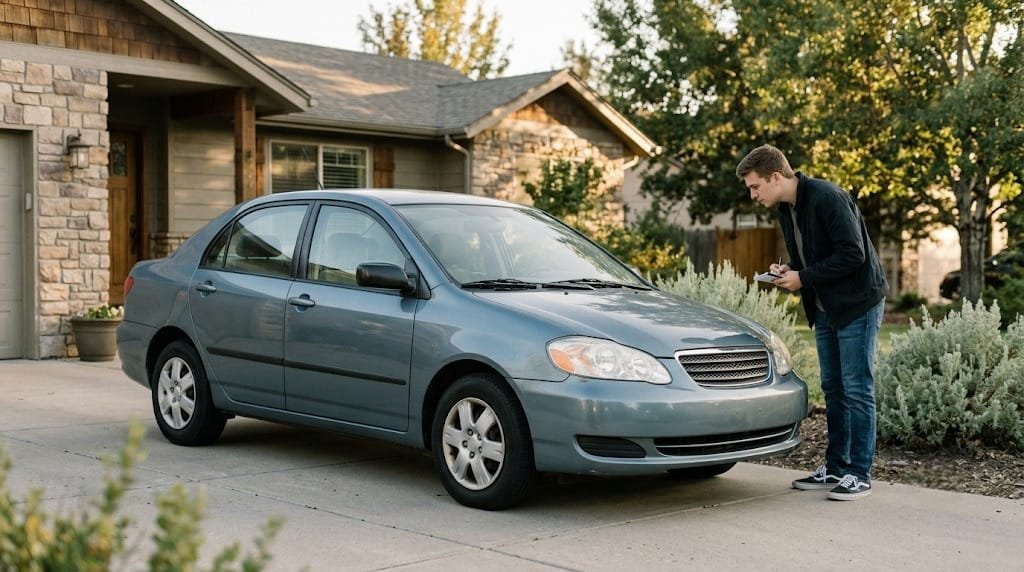
Small choices can change a lender’s view of your application. Consider these approaches:
- Choose a car priced well within your budget.
- Offer a larger down payment if you can.
- Shorten the loan term if the payment remains manageable.
- Apply with a co-signer if you have access to one.
A smaller loan on a modest car is usually easier to approve than a stretch purchase. Lenders also look at how large the payment is compared with your income, so keeping it comfortable helps.
Comparing Offers the Smart Way

Focus on the APR, the loan term, and the total amount you will repay. A low monthly payment can hide a long term and a much higher total cost.
Multiple auto loan inquiries within a short period are often treated as a single inquiry by scoring models, though the exact window varies. Do your rate shopping within a few weeks rather than spreading it over months.
Red Flags to Avoid

Be cautious if a lender will not show you the APR or total cost in writing. Never sign a contract with blank fields or terms you do not understand.
Watch for pressure to buy add-ons you did not ask for, or promises of guaranteed approval before reviewing your information. If something feels rushed, step away and review the paperwork at home.
Building Credit Once You Have the Loan
An auto loan can help you establish a credit history if the lender reports to the bureaus. Paying on time every month is the single most useful habit for building a score from scratch.
Setting up automatic payments can help you avoid missed due dates. After a year or more of on-time payments, you may qualify for better rates on future loans.
Frequently Asked Questions

Can I get a used car loan with no credit history?
Yes, many lenders will consider applicants with no credit file. Approval often depends on income, down payment, and the price of the car.
Do I need a co-signer?
Not always, but a co-signer can improve your chances or lower your rate. Some borrowers qualify on their own with steady income and a solid down payment.
Will financing a used car build my credit?
It can, as long as the lender reports your payments to the credit bureaus. Ask before you sign, since not every lender does.
Financing a used car without a credit history takes more preparation, but the path is clear. Save a solid down payment, document your income, compare offers carefully, and choose a car you can comfortably afford.
Also check: 7 Legal Ways to Lower Your Auto Insurance Premium