

It can be very stressful when you see a warning symbol glowing on your car dashboard. It becomes important to decide whether you should “keep going” or “pull over” with the warning light on. This guide will explain to you what the most common car dashboard warning lights mean, how serious they usually are and what you should do next.
Symbols and wording on a car dashboard can differ between manufacturers and models. Your car’s owner’s manual is the best friend for your vehicle with specific warning lights. The sections below are organised by colour so you can decide the urgency accordingly.
The Essentials
- Red lights generally signal a serious problem or safety issue, amber lights usually mean a system needs attention soon, and green or blue lights are typically informational.
- If a red oil pressure, coolant temperature, or brake warning appears, stop in a safe place and do not keep driving until you know why.
- A steady check engine light calls for a prompt diagnosis, while a flashing one suggests a more serious problem.
- Your owner’s manual is the best source for the exact meaning of every symbol in your car.
What Do Dashboard Warning Light Colors Mean?
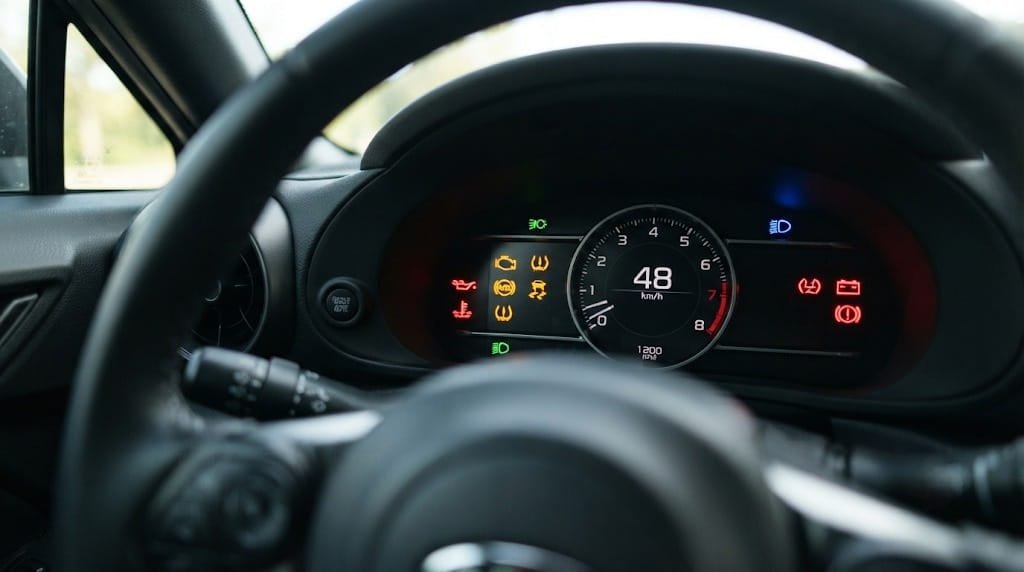
Most vehicles borrow the logic of a traffic light. Red generally means a serious problem or safety concern, amber or yellow generally means something needs attention soon, and green or blue generally means a feature is active.
Exceptions exist, and the same symbol can be colored differently across brands. The indicator section of your manual shows the exact symbol and the manufacturer’s recommended action.
Red Warning Lights: Stop and Assess
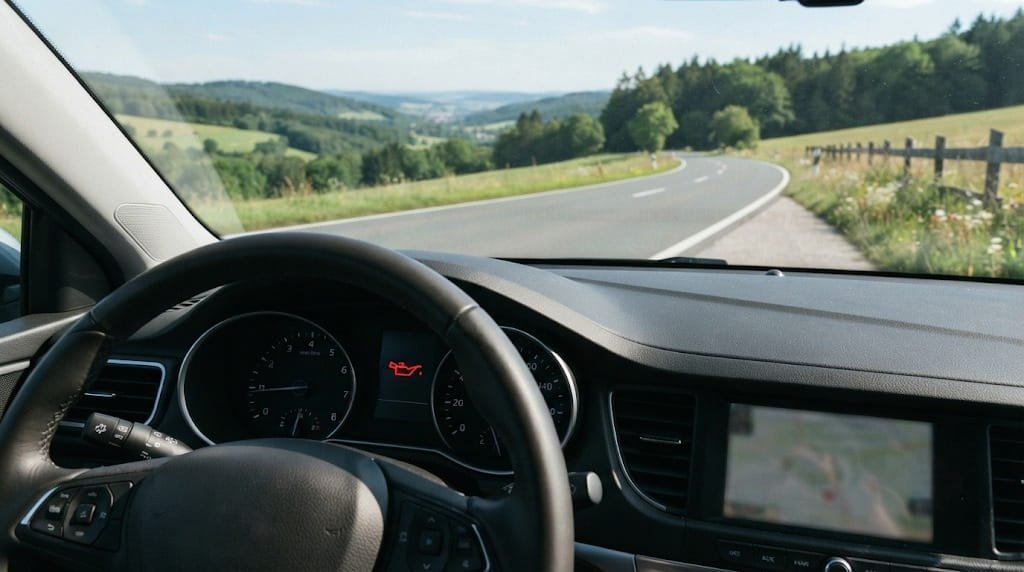
Treat any red warning light as a reason to pull over safely and consult your manual. Continuing to drive with an unexplained red light can turn a manageable repair into a costly or dangerous one.
Oil Pressure Warning Light
This light, often shaped like an old-fashioned oil can, indicates that the engine may not be getting adequate oil pressure. Driving with low oil pressure can cause severe engine damage, so shut the engine off as soon as it is safe to do so.
Low oil level is one possible cause, but it is not the only one. If the light stays on after you top off the oil, have a mechanic inspect the car.
Engine Coolant Temperature Light
A thermometer floating in wavy lines usually warns that the engine is overheating. Pull over and switch off the engine, because continued driving can cause serious engine damage.
Let the engine cool before checking coolant levels. Never open a hot radiator or coolant cap, since pressurized fluid can cause burns.
Battery and Charging System Light
The battery-shaped symbol typically points to a problem in the charging system rather than the battery alone. Possible causes include a failing alternator or a worn belt, and the car may eventually lose power if the issue is not addressed.
Because the remaining driving time is hard to predict, head directly to a safe location or repair shop.
Brake System Warning Light
A red brake light can mean the parking brake is engaged, brake fluid is low, or the braking system has a fault. If the parking brake is fully released and the light stays on, have the brakes inspected before driving further.
If the pedal feels soft or unusual, treat it as urgent and arrange a tow.
Airbag (SRS) Warning Light
This light, usually a seated figure with a circle, indicates a fault in the airbag or seat belt restraint system. A lit airbag warning may mean the airbags will not deploy as intended in a collision, so have it diagnosed promptly.
The car often drives normally, which makes this light easy to postpone. Postponing it defeats the purpose of the safety system.
Yellow and Amber Warning Lights: Attention Needed Soon
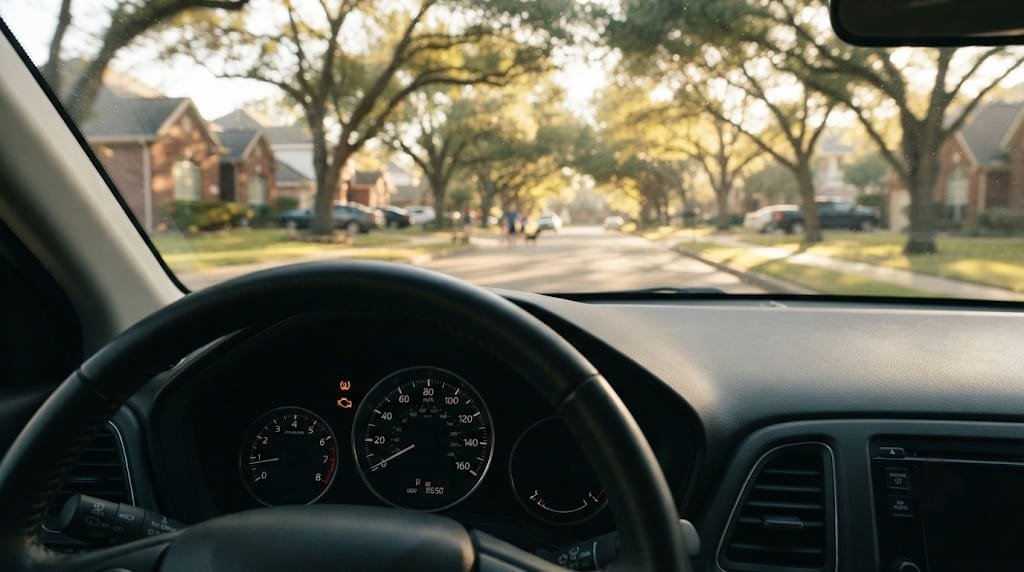
Amber lights usually allow you to keep driving, but they should not be ignored. Addressing an amber light early often prevents a small fault from growing into a larger one.
Check Engine Light
The engine-shaped symbol can be triggered by many issues, from a loose gas cap to a faulty sensor or a failing catalytic converter. A steady light means you should schedule a diagnosis soon, while a flashing light generally points to a more serious problem, such as an engine misfire, and calls for prompt service.
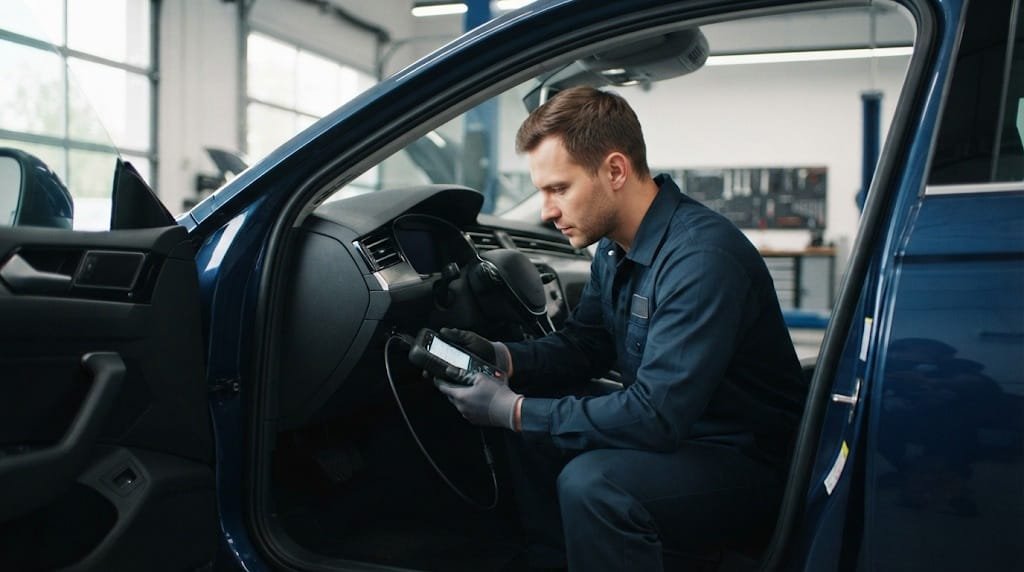
A mechanic or diagnostic scanner can read the stored trouble code, which helps narrow down the cause. Some auto parts stores offer code reading, though policies vary.
ABS Warning Light
The letters “ABS” in a circle indicate a fault in the anti-lock braking system. Standard braking usually still works, but the anti-lock function may be unavailable, so drive cautiously and get it checked.
Tire Pressure Monitoring System (TPMS) Light
This symbol, typically a horseshoe shape with an exclamation mark, appears when one or more tires are below the recommended pressure. Check each tire with a gauge and inflate to the pressure listed on the placard, commonly found on the driver’s door jamb.
On many vehicles, a light that flashes and then stays solid can indicate a sensor problem rather than low pressure. Your manual will confirm how your system behaves.
Traction and Stability Control Light
A car with curved skid marks behind it flashes briefly when the system is working on a slippery surface. A brief flash is typically normal, while a steady light may mean the system is switched off or has a fault.
Green and Blue Indicator Lights

These lights usually confirm that a system is on, such as headlights, turn signals, cruise control, or high beams. Green and blue indicators are typically informational and do not signal a fault.
A blue light often marks high beams, which is worth remembering when you meet oncoming traffic.
Dashboard Warning Lights at a Glance
Use the table below as a quick starting point rather than a substitute for your manual. Meanings and recommended actions can vary by make, model, and year, so confirm anything unclear in your owner’s manual.
| Warning light | Typical color | What it commonly indicates | Suggested response |
| Oil pressure | Red | Low oil pressure or low oil level | Stop safely, shut off the engine, and get it inspected |
| Coolant temperature | Red | Engine may be overheating | Pull over, let the engine cool, and seek service |
| Battery/charging | Red | Charging system fault, such as the alternator or belt | Head to a safe location or repair shop promptly |
| Brake system | Red | Parking brake engaged, low fluid, or brake fault | Check the parking brake; if the light persists, have brakes inspected |
| Airbag/SRS | Red (varies) | Restraint system fault | Schedule diagnosis promptly |
| Check engine (steady) | Amber | Emissions or engine-related fault, causes vary | Schedule a diagnosis soon |
| Check engine (flashing) | Amber | Possible serious problem such as a misfire | Reduce speed and seek prompt service |
| ABS | Amber | Anti-lock braking fault | Drive cautiously and get it checked |
| TPMS | Amber | Low tire pressure or a sensor issue | Check and inflate tires; see a shop if it persists |
| Traction/stability control | Amber | System active (flashing) or off/faulty (steady) | Ease off if flashing; check manual if steady |
| High beam | Blue | High beams are on | No action needed |
What to Do When a Warning Light Comes On
Start by noting the color and symbol, because color tells you how urgent the situation is. If the light is red, find a safe place to stop rather than pushing on to your destination.
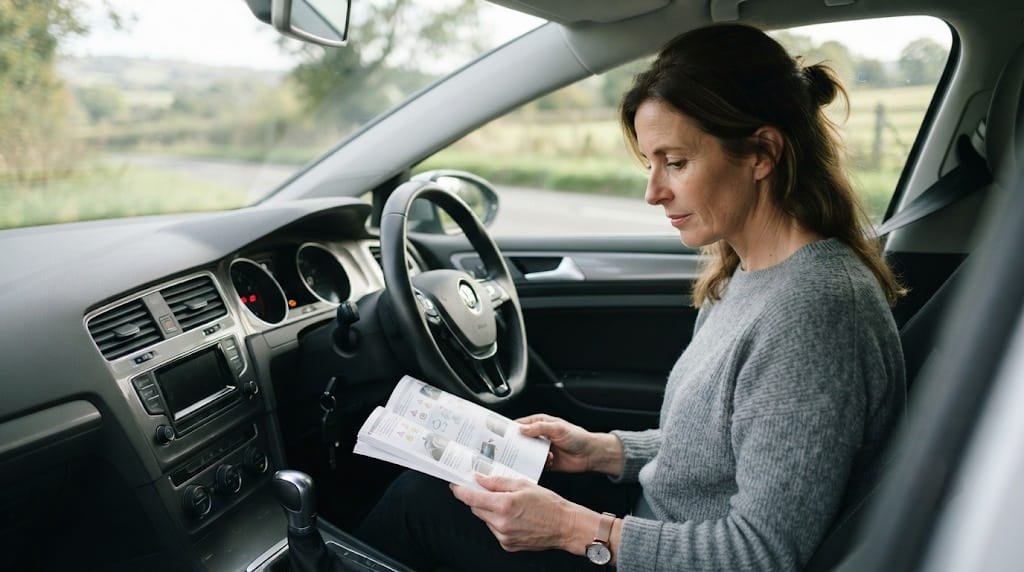
Next, consult your owner’s manual to confirm what the symbol means for your vehicle. If you are unsure, contact a qualified mechanic or roadside assistance before driving further.
Common Questions About Warning Lights
Can I Drive With the Check Engine Light On?
If the light is steady and the car drives normally, many drivers can continue for a short time while arranging a diagnosis. If the light is flashing or the car runs roughly, reduce speed and seek service promptly.
Why Did a Warning Light Turn On and Then Go Off?
Some faults are intermittent, and a light may clear after the condition passes. A light that comes and goes still deserves a diagnosis, because the fault code may remain stored.
Do All Warning Lights Turn On When I Start the Car?
Many lights briefly illuminate when you turn the ignition on, as part of a self-check. A light that stays on after the engine starts is the one to investigate.
Key Takeaways for Drivers
Dashboard warning lights are the car’s way of reporting trouble early. Learning the color code and the handful of high-priority symbols will help you respond calmly and avoid costly damage.
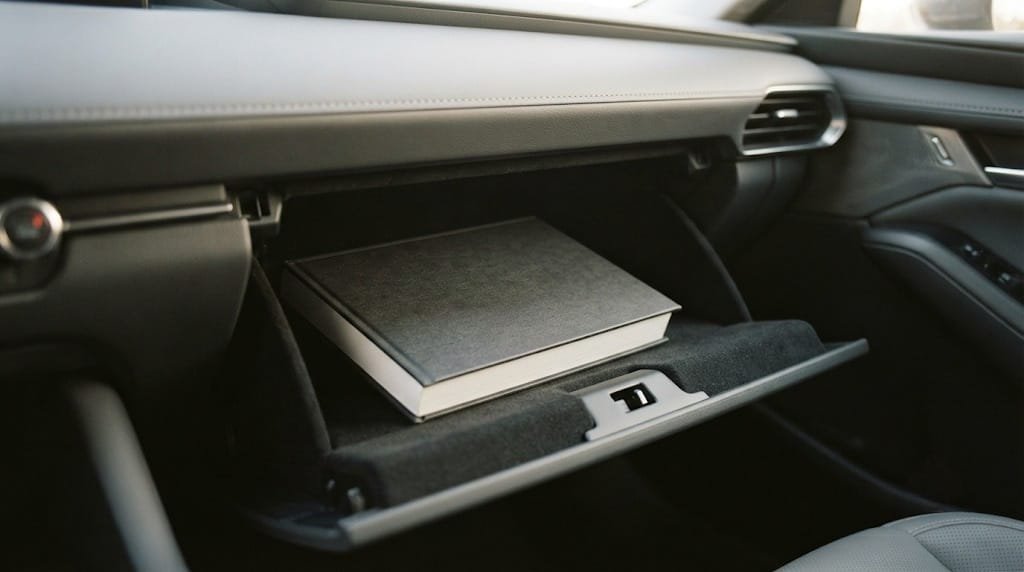
Keep your owner’s manual in the glovebox and review its indicator section before you need it. A few minutes of reading now can save time and stress later.