
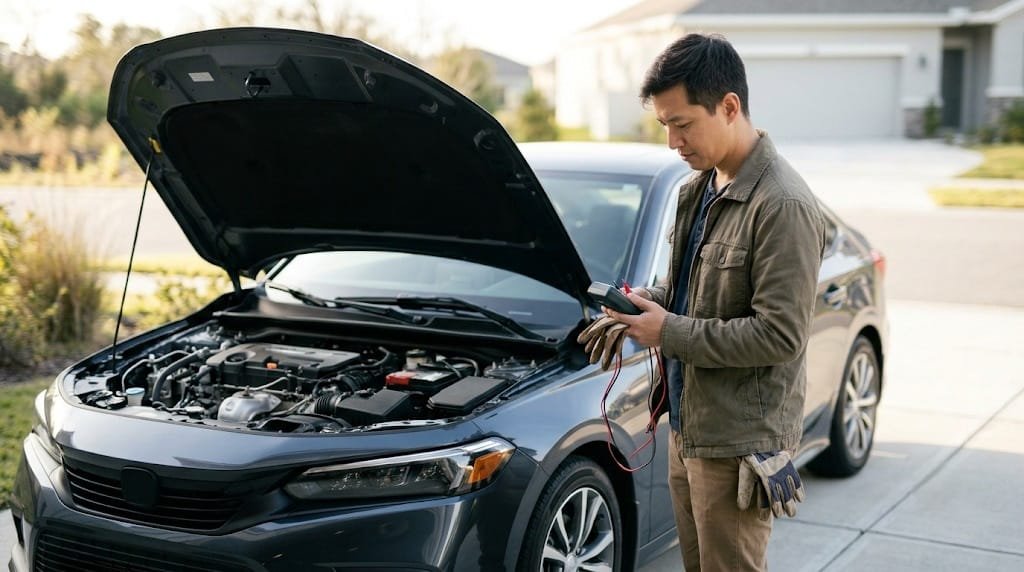
When your car refuses to start, the first thing that comes to mind is that something is wrong with the battery. Learning how to test a car battery at home can save you from a tow, a repair bill and a missed appointment.
In this guide, we have covered the warning signs and simple tests you can do to save your battery from failing. You need only a few basic tools to check the health of your battery.
Quick Battery Health Checklist

- Slow cranking, dim lights, and a clicking sound when you turn the key are common signs of a weak battery.
- A multimeter reading of about 12.6 volts with the engine off suggests a fully charged battery, while readings near 12.2 volts or lower point to a weak or discharged one.
- With the engine running, a healthy charging system typically shows roughly 13.7 to 14.7 volts.
- A load test is the most direct way to confirm battery health, and many auto parts stores offer one.
- Many car batteries last around three to five years, though climate and driving habits can shorten or extend that.
Common Signs Your Car Battery Is Dying
Electrical and Starting Symptoms: The most familiar symptom is a slow, sluggish crank when you start the engine. If the engine turns over more slowly than it used to, the battery is the first thing you need to check.
Physical Warning Signs: Other signs include dim headlights, flickering interior lights, a battery warning light on the dashboard, and a rapid clicking noise when you turn the key. Electronics that reset or behave oddly can also point to low battery power.
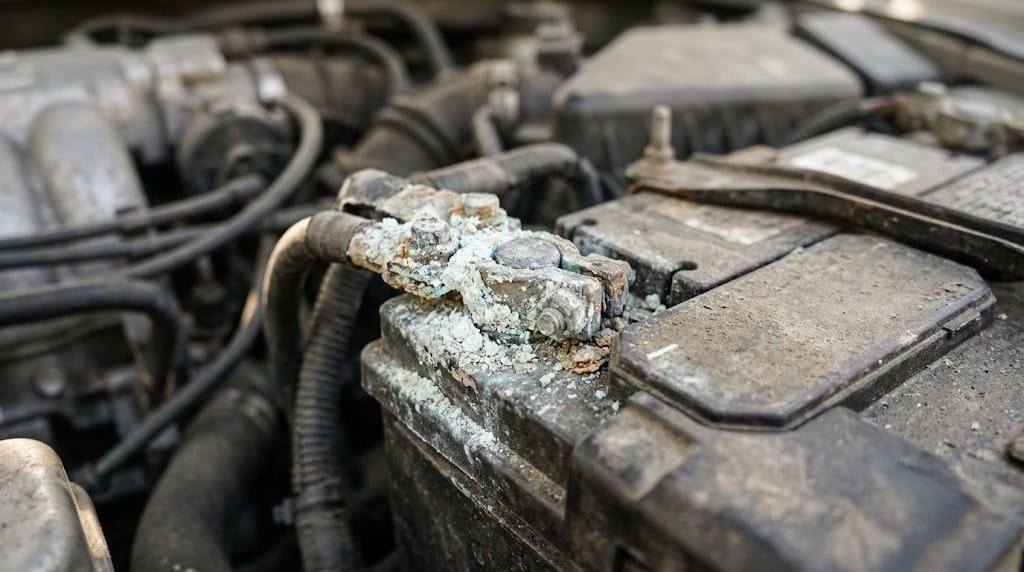
Physical clues matter too. Look for a swollen battery case, a rotten-egg smell, or white or blue-green crust around the terminals.
How to Test Your Car Battery at Home
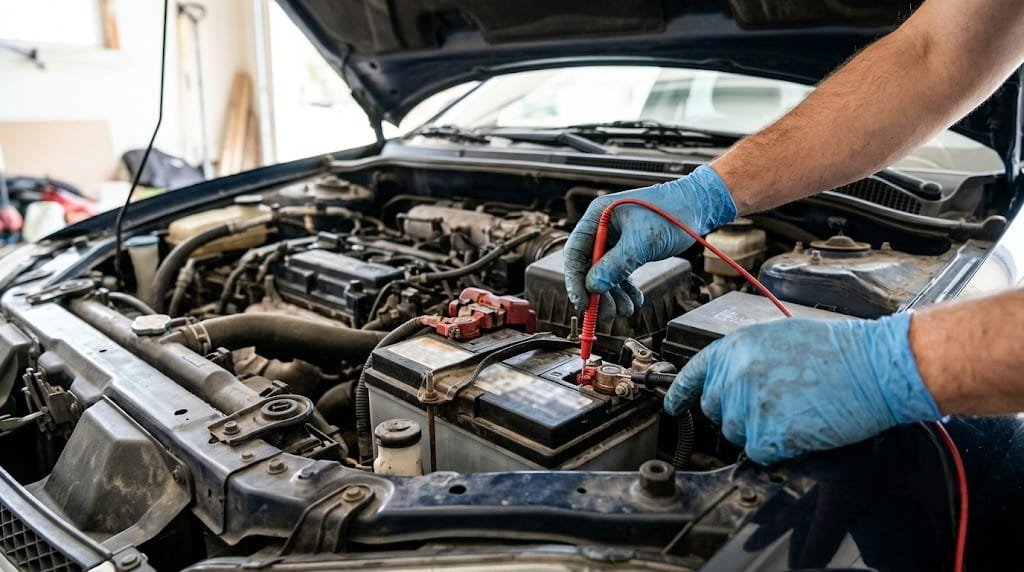
Safety Precautions Before You Begin: You can check a battery in several ways, from a glance to a measured voltage reading. Start with the simplest tests and move to the more precise ones if the results are unclear.
Before you begin, wear eye protection and gloves, turn off the engine, and keep sparks and open flames away from the battery. Car batteries can release flammable gas, so good ventilation helps.
Start With a Visual Inspection
1. Open the hood and look at the battery case, the cables, and the terminals.
2. Corrosion, cracks, leaks, or a bulging case are strong reasons to have the battery replaced or professionally checked.
3. Loose cable clamps can mimic a dying battery, so make sure the connections are snug.
4. If the terminals are corroded, cleaning them with a baking soda and water mixture and a brush often restores a better connection.
Do the Headlight Test
1. Park in a shaded spot, turn off the engine, and switch on the headlights.
2. Bright headlights that dim noticeably when you start the engine can suggest the battery is struggling.
3. This test is rough and not a substitute for a measurement. Treat it as a quick clue that tells you whether to keep investigating.
Test Voltage with a Multimeter
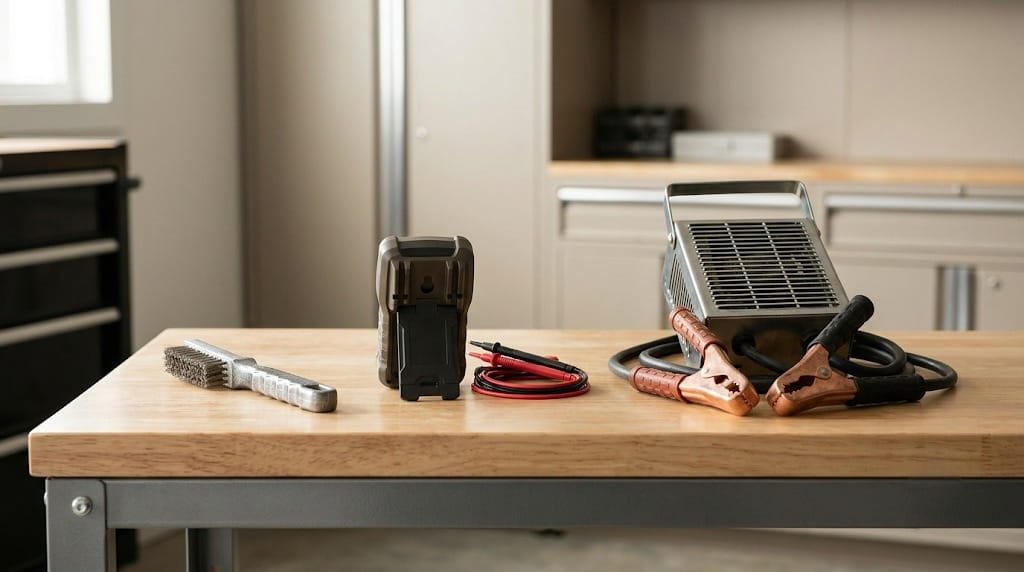
A basic digital multimeter costs little and gives you a number to work with. Set it to DC volts (the 20-volt range works on most models), then touch the red probe to the positive terminal and the black probe to the negative terminal.
For the most reliable reading, test the battery after the car has sat for several hours so a recent drive or charge does not inflate the result.
Commonly cited resting voltage guidelines are:
| About 12.6 volts or higher | Fully charged |
| About 12.4 volts | Roughly 75 percent charged |
| About 12.2 volts | Roughly 50 percent charged |
| Below 12.0 volts | Heavily discharged |
These figures can vary slightly by battery type and manufacturer, so check your owner’s manual if you want precise numbers.
Check Alternator Output
Start the engine and measure voltage across the terminals again. A reading of roughly 13.7 to 14.7 volts generally indicates the alternator is charging the battery properly.
If the number stays near the resting voltage, or climbs well above that range, the charging system may need attention. In that case, replacing the battery alone may not solve the problem.
Get a Load Test
A voltage reading shows charge, but it does not always reveal how well a battery performs under demand. A load test is the most direct way to see whether a battery can deliver power when starting the engine.
Many auto parts stores will run this test, and some do so at no charge, though policies vary by location. Calling ahead is a quick way to confirm.
Battery Testing Methods Compared
| Method | Tools Needed | What It Tells You | Main Limitation |
| Visual inspection | None | Physical damage, corrosion, loose connections | Cannot measure charge or capacity |
| Headlight test | None | A rough sign of weak power | Subjective and not precise |
| Multimeter voltage test | Digital multimeter | State of charge at rest | Does not fully show performance under load |
| Running-engine voltage check | Digital multimeter | Whether the alternator appears to be charging | Does not test the battery’s capacity |
| Load test | Battery load tester or store service | How the battery performs under demand | Requires a tester or a store visit |
No single test tells the whole story, so combining a voltage reading with a load test gives the clearest picture. The table shows why each method works best as a piece of a larger check.
Is It the Battery or the Alternator?

A dead battery and a failing alternator can look alike, since both can leave you stranded. The key difference is that a bad battery struggles to start the car, while a bad alternator often lets the car start but fails to keep the battery charged while driving.
If a jump-start gets the car running but it stalls soon after the cables come off, the alternator is a likely suspect. A battery that repeatedly dies after sitting overnight may instead have a drain or simply be near the end of its life.
If you are unsure, a store or shop can test both components together.
When to Replace Your Battery
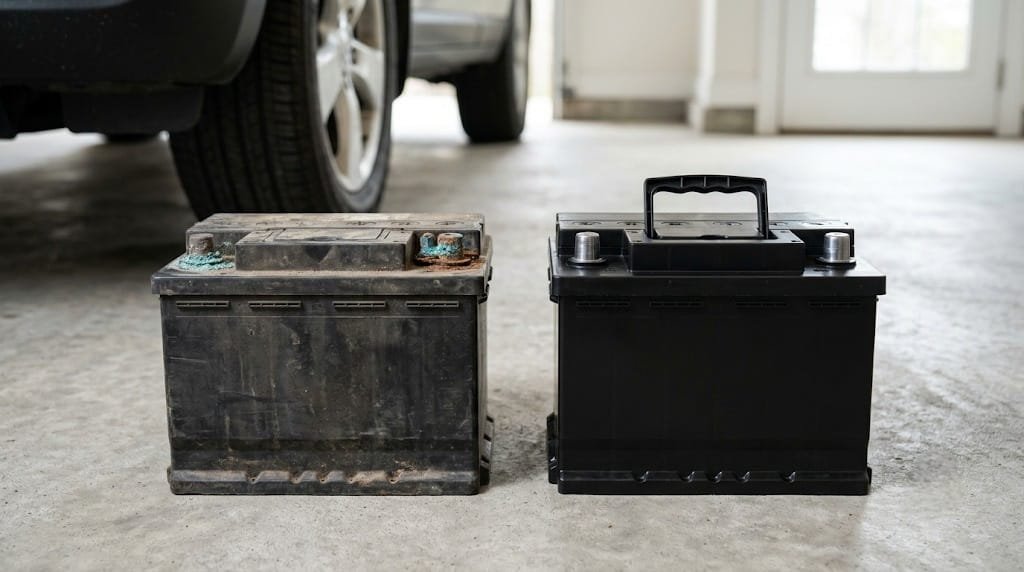
Many car batteries last around three to five years, although heat, short trips, and heavy electrical use can shorten that. If your battery is in that age range and shows slow cranking or low voltage readings, replacement is usually the sensible next step.
You can often find the manufacture date on a sticker or stamped code on the case. If you cannot decode it, your owner’s manual or the manufacturer can explain the format.
When buying a new battery, match the size, terminal layout, and specifications listed in your owner’s manual.
How to Make a Battery Last Longer
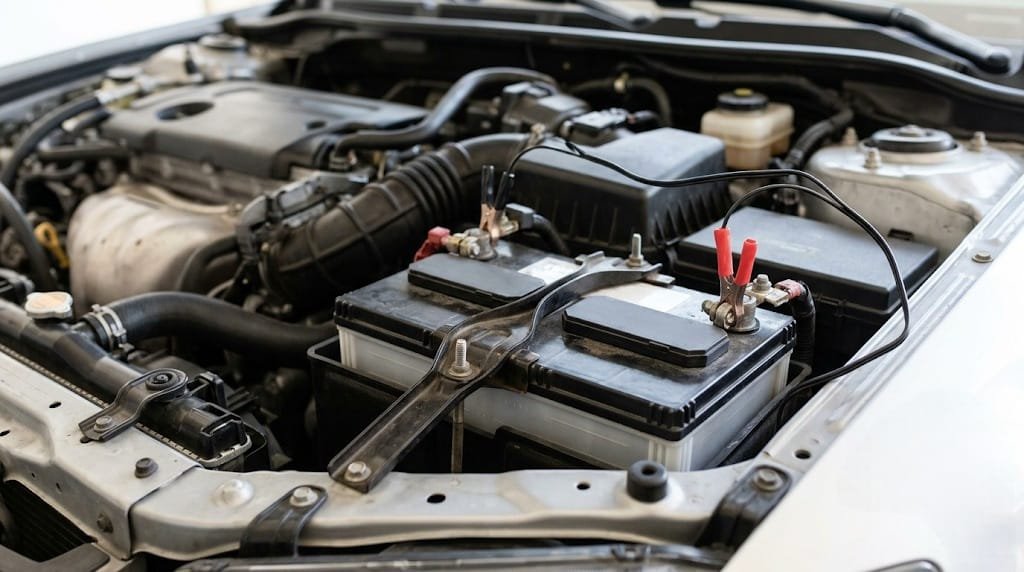
Small habits can help a battery reach the upper end of its lifespan. Regular longer drives let the alternator recharge the battery, which is especially useful if you mostly make short trips.
Keep the terminals clean, make sure the battery is securely mounted, and avoid leaving lights or accessories on with the engine off. If the car sits unused for weeks, a maintenance charger can help keep the charge level up.
Next Steps for a Weak Car Battery

Testing a car battery at home takes little time and requires only basic tools. Combining symptoms, a voltage check, and a load test gives you enough information to decide whether to recharge, repair, or replace.
If your results are borderline or the car still behaves oddly, a professional test can confirm what is going on. Catching a weak battery early is usually far easier than dealing with a car that will not start.
Also check: Know the Signs: When to Replace Your Brake Pads